The most common sizing mistake is ordering by weight alone. A 400 g pouch of granola and a 400 g pouch of sugar look nothing alike, because granola takes up about two and a half times the space. Pouches are sized by volume. Here is a simple way to work out the right size before you order samples.
Step 1: find your product’s bulk density
Bulk density is how much a given volume of your product weighs, including the air between pieces. You can measure it in a minute:
- Fill a measuring cup to 250 mL without packing it down.
- Weigh the contents in grams.
- Divide the weight by 250. That is your bulk density in grams per millilitre (g/mL).
Approximate examples: whole bean coffee is around 0.38 g/mL, granola around 0.35, rice and grains around 0.8 and granulated sugar around 0.85. Measure your own product, because recipes, roasts and particle sizes vary.
Step 2: calculate the volume
Divide your fill weight by the bulk density. For 400 g of granola at 0.35 g/mL, that is about 1,140 mL of product.
Step 3: add headspace
You need room above the product for the zipper, the tear notch and a clean top seal, and so the pouch isn’t straining when shoppers handle it. As a starting point, look for a pouch with about 20% more capacity than your product volume. Chunky or irregular products, such as chips or jerky, may need more; free-flowing powders that settle may need less.
Try it: pouch size helper
0 mLof product
0 mLpouch capacity to look for (with ~20% headspace)
Densities are approximate. For an exact figure, weigh a measured cup of your product. We will confirm dimensions with samples.
Step 4: choose the shape
- Taller and narrower pouches give you a bigger front panel for branding.
- Wider pouches with a deeper gusset stand more steadily and hold more for their height.
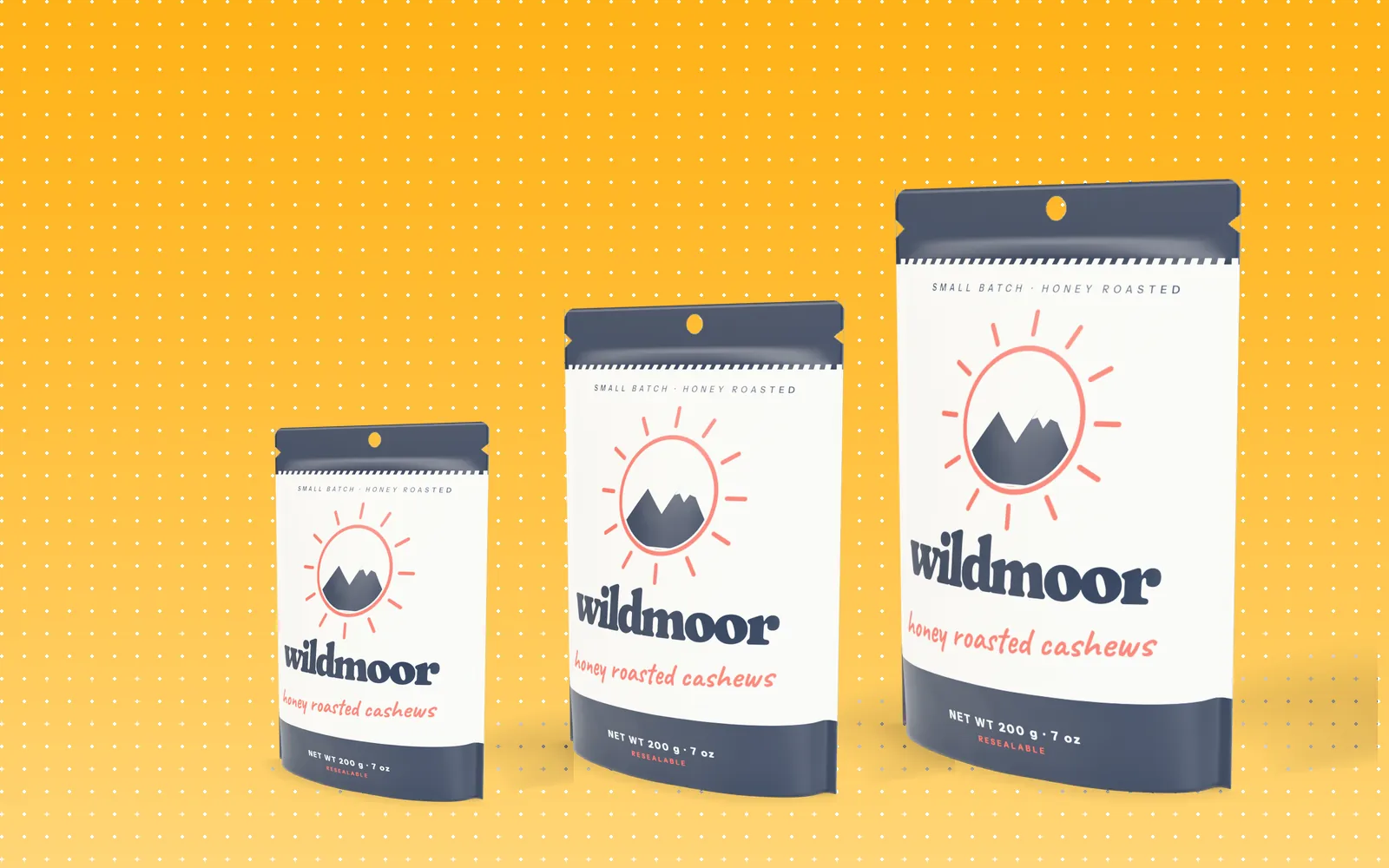
- A family of sizes with consistent proportions makes a product range look tidy on shelf.
Step 5: test-fill samples
Numbers get you close; a sample gets you certain. We can send sample pouches so you can fill them with your real product, check the zipper closes cleanly and see how the pack looks on a shelf before you commit to a print run.
Quick rule: weight tells you what to print on the label. Volume tells you what size pouch to buy.
What to send us for a quote
- Your product and fill weight (and bulk density, if you measured it).
- Closures and add-ons: zipper, tear notch, hang hole, window or valve.
- Finish: matte, gloss, soft-touch, metallized, holographic or kraft.
- Quantity per design and your target in-hand date.
See all the options on our custom stand-up pouches page, or request a quote.